RuangKita
Marketplace
AI-powered venue marketplace that turns long, manual listings into a faster, more accurate onboarding flow for community spaces.
AI-powered venue marketplace that turns long, manual listings into a faster, more accurate onboarding flow for community spaces.
Lead Business Analyst & System Designer
Lead Business Analyst & System Designer
Sep 2025 – Dec 2025
Sep 2025 – Dec 2025
Figma, React Native, Firebase, Cloudinary, Gemini API
Figma, React Native, Firebase, Cloudinary, Gemini API

Overview
Overview
Bridging venue owners and business users
Bridging venue owners and business users
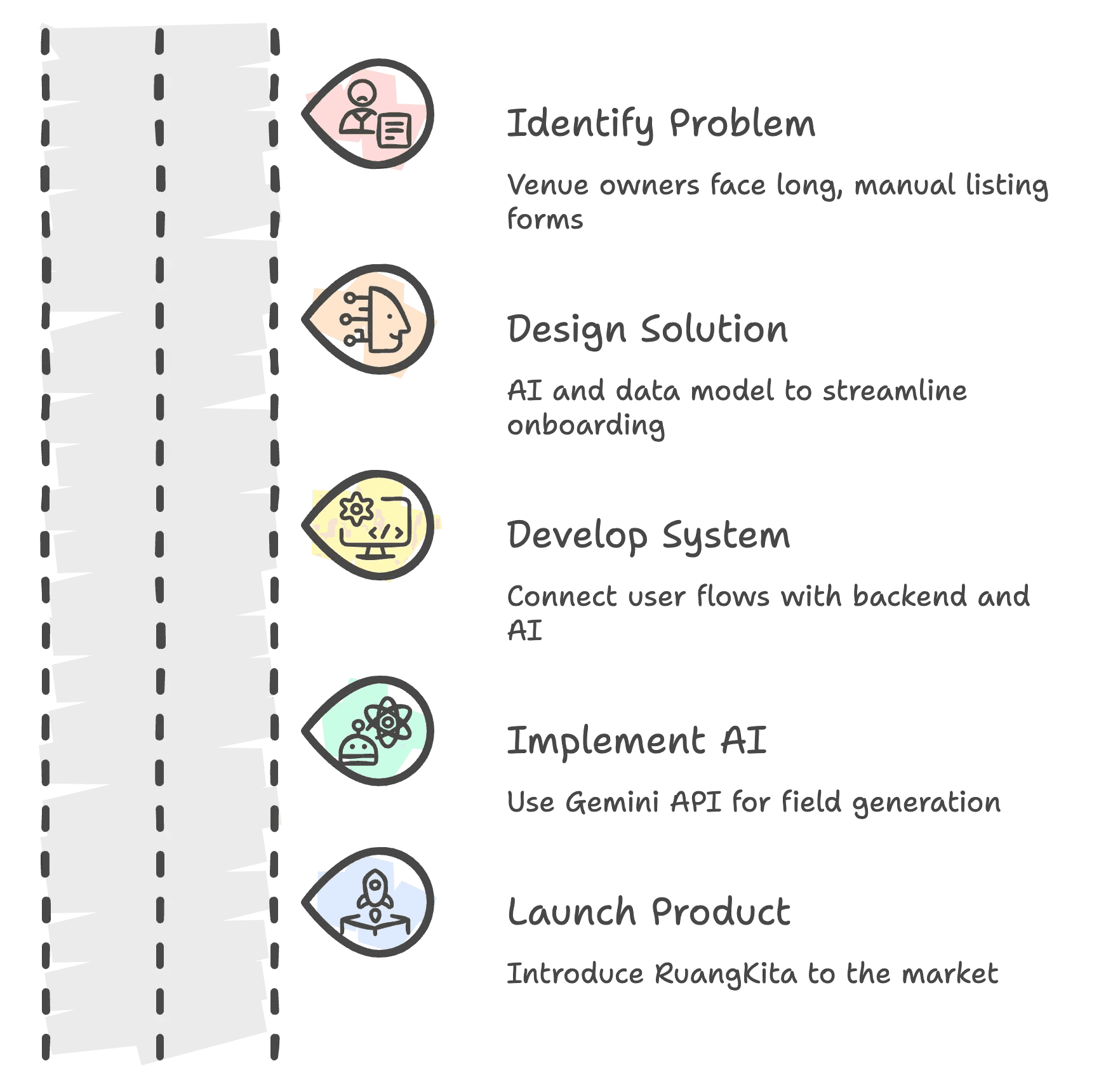
RuangKita is an AI-powered venue marketplace that helps people find and book community spaces with less friction. I built it to bridge the gap between venue owners and anyone looking for a simple, reliable way to list and discover spaces.
As Lead Business Analyst & System Designer, I owned the end-to-end redesign of the onboarding journey for venue owners. I focused on how AI and a better data model could solve real operational pain: long forms, inconsistent inputs, and listings that did not match what renters actually needed.
In this case study, I treat RuangKita as both a product and a system, connecting user flows, a Firebase-backed backend, media handling through Cloudinary, and business constraints.
RuangKita is an AI-powered venue marketplace that helps people find and book community spaces with less friction. I built it to bridge the gap between venue owners and anyone looking for a simple, reliable way to list and discover spaces.
As Lead Business Analyst & System Designer, I owned the end-to-end redesign of the onboarding journey for venue owners. I focused on how AI and a better data model could solve real operational pain: long forms, inconsistent inputs, and listings that did not match what renters actually needed.
In this case study, I treat RuangKita as both a product and a system, connecting user flows, a Firebase-backed backend, media handling through Cloudinary, and business constraints.
RuangKita is an AI-powered venue marketplace that helps people find and book community spaces with less friction. I built it to bridge the gap between venue owners and anyone looking for a simple, reliable way to list and discover spaces.
As Lead Business Analyst & System Designer, I owned the end-to-end redesign of the onboarding journey for venue owners. I focused on how AI and a better data model could solve real operational pain: long forms, inconsistent inputs, and listings that did not match what renters actually needed.
In this case study, I treat RuangKita as both a product and a system, connecting user flows, a Firebase-backed backend, media handling through Cloudinary, and business constraints.
Challenge

Manual forms are the enemy of conversion
During the initial research phase, I found that venue owners were overwhelmed by the listing process. The existing system forced them to go through long, manual forms with many checkboxes and fields.
On average, one venue listing took around 20 minutes to complete. This slow experience did not only frustrate users; it also created a 30% error rate in the data, making it hard for renters to find spaces that actually fit their requirements.
The core challenge was clear: how do we reduce friction for venue owners while improving the quality and consistency of listing data for the marketplace?
During the initial research phase, I found that venue owners were overwhelmed by the listing process. The existing system forced them to go through long, manual forms with many checkboxes and fields.
On average, one venue listing took around 20 minutes to complete. This slow experience did not only frustrate users; it also created a 30% error rate in the data, making it hard for renters to find spaces that actually fit their requirements.
The core challenge was clear: how do we reduce friction for venue owners while improving the quality and consistency of listing data for the marketplace?
During the initial research phase, I found that venue owners were overwhelmed by the listing process. The existing system forced them to go through long, manual forms with many checkboxes and fields.
On average, one venue listing took around 20 minutes to complete. This slow experience did not only frustrate users; it also created a 30% error rate in the data, making it hard for renters to find spaces that actually fit their requirements.
The core challenge was clear: how do we reduce friction for venue owners while improving the quality and consistency of listing data for the marketplace?
Strategy

Breaking the bottleneck with intelligent automation
Breaking the bottleneck with intelligent automation
Instead of asking users for more structured data, I designed a system that could extract it from a simple description. By integrating the Gemini API, we allowed venue owners to describe their space in their own words, while the system generated and filled the matching fields (capacity, facilities, location details, and more).
I approached the marketplace like a supply chain problem. Using Business Process Mapping, I defined how each facility should move through the system from raw descriptions to verified, well-categorized listings. I then mapped those entities into a Firebase-backed data model so every venue could be stored and tagged in a consistent and scalable way, while Cloudinary handled image storage and optimization for each listing.
This strategy turned the onboarding flow from a long manual form into a guided, assisted process where AI does the heavy lifting in the background.
Instead of asking users for more structured data, I designed a system that could extract it from a simple description. By integrating the Gemini API, we allowed venue owners to describe their space in their own words, while the system generated and filled the matching fields (capacity, facilities, location details, and more).
I approached the marketplace like a supply chain problem. Using Business Process Mapping, I defined how each facility should move through the system from raw descriptions to verified, well-categorized listings. I then mapped those entities into a Firebase-backed data model so every venue could be stored and tagged in a consistent and scalable way, while Cloudinary handled image storage and optimization for each listing.
This strategy turned the onboarding flow from a long manual form into a guided, assisted process where AI does the heavy lifting in the background.
Instead of asking users for more structured data, I designed a system that could extract it from a simple description. By integrating the Gemini API, we allowed venue owners to describe their space in their own words, while the system generated and filled the matching fields (capacity, facilities, location details, and more).
I approached the marketplace like a supply chain problem. Using Business Process Mapping, I defined how each facility should move through the system from raw descriptions to verified, well-categorized listings. I then mapped those entities into a Firebase-backed data model so every venue could be stored and tagged in a consistent and scalable way, while Cloudinary handled image storage and optimization for each listing.
This strategy turned the onboarding flow from a long manual form into a guided, assisted process where AI does the heavy lifting in the background.
Impact
Efficiency redefined through intelligent automation
Efficiency redefined through intelligent automation
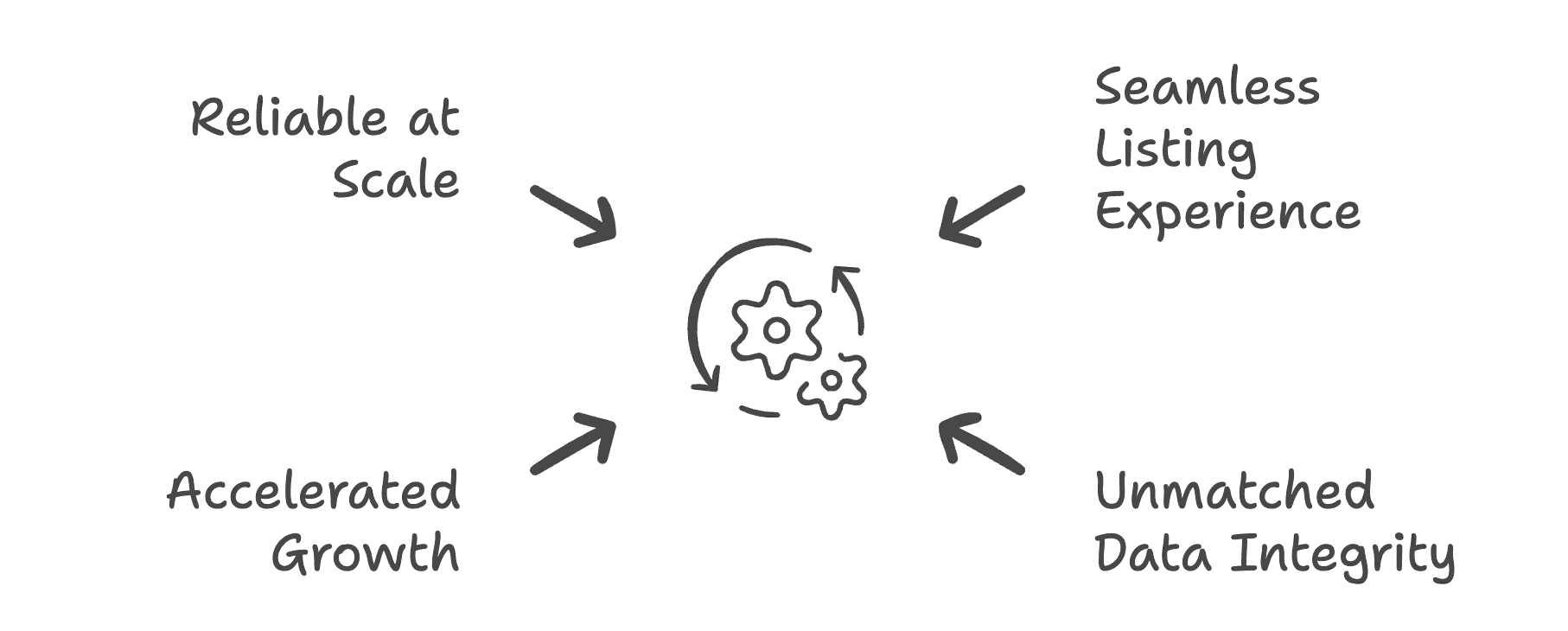
Moving away from manual entry fundamentally changed the health of the platform and how users stayed with the product.
Listing time dropped from around 20 minutes to under 7 minutes per venue.
Automated generation of fields pushed data accuracy close to 100%, almost removing miscommunication between venue owners and renters.
The simplified onboarding allowed venue inventory to grow roughly 2× faster than previous iterations.
A Firebase-backed backend kept listing data, availability, and updates in sync, helping the system stay reliable during peak booking hours.
Cloudinary helped keep venue images fast and responsive, so richer listings did not slow down the experience.
These results showed that small changes in workflow and system design can unlock big improvements in growth and data quality.
Moving away from manual entry fundamentally changed the health of the platform and how users stayed with the product.
Listing time dropped from around 20 minutes to under 7 minutes per venue.
Automated generation of fields pushed data accuracy close to 100%, almost removing miscommunication between venue owners and renters.
The simplified onboarding allowed venue inventory to grow roughly 2× faster than previous iterations.
A Firebase-backed backend kept listing data, availability, and updates in sync, helping the system stay reliable during peak booking hours.
Cloudinary helped keep venue images fast and responsive, so richer listings did not slow down the experience.
These results showed that small changes in workflow and system design can unlock big improvements in growth and data quality.
Moving away from manual entry fundamentally changed the health of the platform and how users stayed with the product.
Listing time dropped from around 20 minutes to under 7 minutes per venue.
Automated generation of fields pushed data accuracy close to 100%, almost removing miscommunication between venue owners and renters.
The simplified onboarding allowed venue inventory to grow roughly 2× faster than previous iterations.
A Firebase-backed backend kept listing data, availability, and updates in sync, helping the system stay reliable during peak booking hours.
Cloudinary helped keep venue images fast and responsive, so richer listings did not slow down the experience.
These results showed that small changes in workflow and system design can unlock big improvements in growth and data quality.
Reflection
Complexity belongs in the system, not in the interface
Complexity belongs in the system, not in the interface
This project was a deep dive into making AI feel invisible. I learned that my role is not only to design screens, but to act as a System Strategist who shields users from technical complexity.
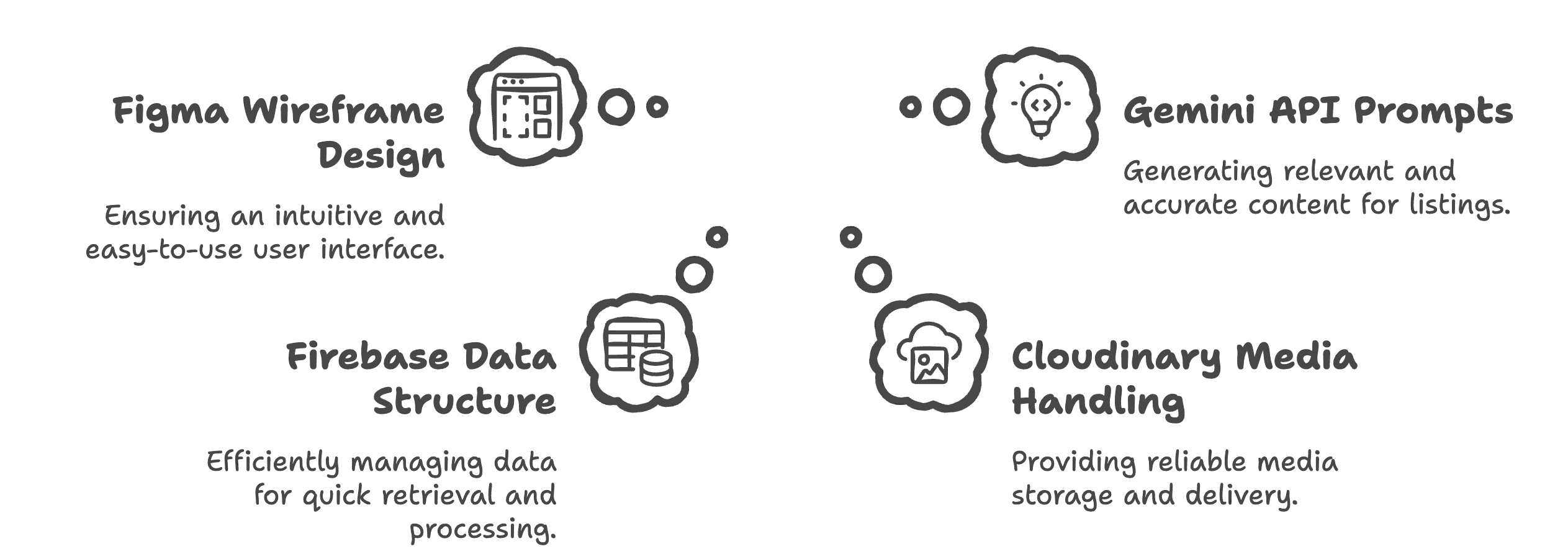
For RuangKita, every decision from Figma wireframes to how data is structured in Firebase, how media is handled through Cloudinary, and how prompts are designed for the Gemini API was driven by the same goal: remove barriers to entry while keeping the system robust behind the scenes.
The main lesson I took from this work is the best “manual” processes are the ones that disappear into clear workflows and well-designed automation. When the system is doing the hard work, the experience can stay light for the people who use it.
This project was a deep dive into making AI feel invisible. I learned that my role is not only to design screens, but to act as a System Strategist who shields users from technical complexity.
For RuangKita, every decision from Figma wireframes to how data is structured in Firebase, how media is handled through Cloudinary, and how prompts are designed for the Gemini API was driven by the same goal: remove barriers to entry while keeping the system robust behind the scenes.
The main lesson I took from this work is the best “manual” processes are the ones that disappear into clear workflows and well-designed automation. When the system is doing the hard work, the experience can stay light for the people who use it.
This project was a deep dive into making AI feel invisible. I learned that my role is not only to design screens, but to act as a System Strategist who shields users from technical complexity.
For RuangKita, every decision from Figma wireframes to how data is structured in Firebase, how media is handled through Cloudinary, and how prompts are designed for the Gemini API was driven by the same goal: remove barriers to entry while keeping the system robust behind the scenes.
The main lesson I took from this work is the best “manual” processes are the ones that disappear into clear workflows and well-designed automation. When the system is doing the hard work, the experience can stay light for the people who use it.